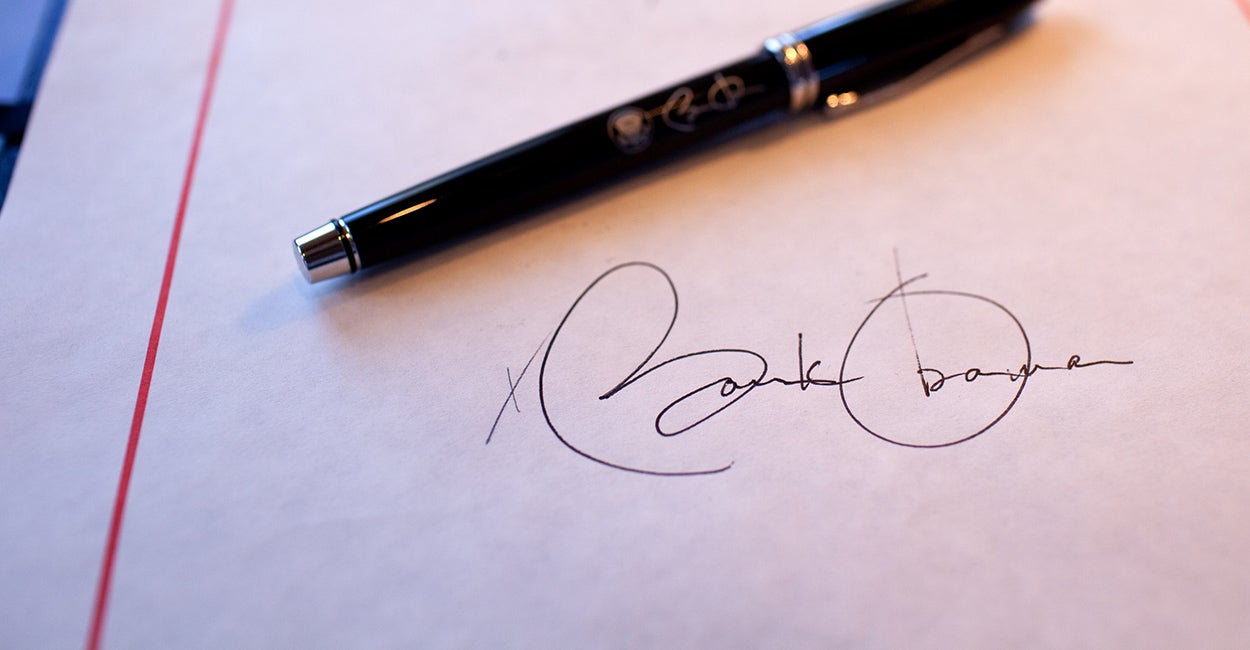
President Barack Obama signed an executive order today expanding “Pay-As-You-Earn,” the already generous repayment option available to students with federal loans that factors in their current income when calculating their monthly student loan payments.
Before 2014, students had access to a plan that capped monthly loan payments at 15 percent of a student’s discretionary income—defined as “the adjusted gross income minus the federal poverty line that corresponds to your family size and the state in which you reside”—with any remaining balance being forgiven after 25 years, or 10 years for those working in “public service.”
>>> Related News: Obama Calls Out ‘Millionaires’ to Pay for Student Loans
Not content with that generous option, the Obama administration issued regulations last November that created the new Pay- As- You- Earn plan, which caps what students can be required to pay to just 10 percent of discretionary income. Under the new Pay- As- You- Earn program, loan forgiveness begins after just 20 years—not 25—and the 10- year forgiveness for government workers and those working in public service still applies.
The pending executive order will extend Pay- As- You- Earn to an additional 5 million borrowers. The option currently is open only to students who took out loans after 2007, but the White House will extend the option to all borrowers who meet income eligibility.
According to Politico:
TRENDING ARTICLES
“For a 2009 college graduate earning $39,000 a year but carrying $26,500 in loan debt, the plan, which is expected to be in place by December 2015, would reduce monthly repayments by $126 per month and $1,500 a year compared to the standard repayment plan, the White House said”
As the Wall Street Journal reported:
“The number of borrowers in the income-based repayment programs climbed 24 percent from January through March to 1.63 million, the Education Department recently said. The amount of debt covered by the programs grew 22 percent during that period to $88 billion—nearly a tenth of all outstanding federal student debt.”
Repayment caps such as those offered through income-based repayment and other policies put no downward pressure on college prices. After all, why should colleges reduce tuition rates if the government keeps increasing student-loan subsidies? Making income-based repayment options even more generous will continue to enable universities to raise tuition and fees, confident that students will have access to a deep well of federal loans and grants, which will be paid-off through IBR and loan forgiveness on the backs of the taxpayers.
Moreover, such subsidies shift the responsibility of paying for college from the student, who directly benefits from attending college, to the taxpayer.
These new subsidies also are unfair to the three-quarters of taxpayers who don’t have a college degree. Those taxpayers aren’t reaping the benefits of a college degree, such as the average higher lifetime earnings college grads earn, and it’s unfair to ask them to subsidize college grads’ degrees.
Increases in tuition and fees at colleges over the past 30 years suggest that growth in federal subsidies such as loans and grants has done little to mitigate the college cost problem. Federal subsidies now account for 71 percent of all student aid. According to the College Board, over the past 10 years, the number of students borrowing through federal student loans increased by 69 percent.
If Congress is interested in reining-in college costs, increasing federal loans and grants will never achieve that goal. But there are innovative proposals on the table that would.
Sen. Mike Lee, R-Utah, has introduced a proposal that would fundamentally restructure accreditation – a reform that could dramatically reduce college costs and increase access for students to innovative new higher education options.
Income-based repayment does nothing to incentivize colleges to keep costs in check. If anything, IBR should be repealed, not expanded through executive orders that bypass the normal legislative process.
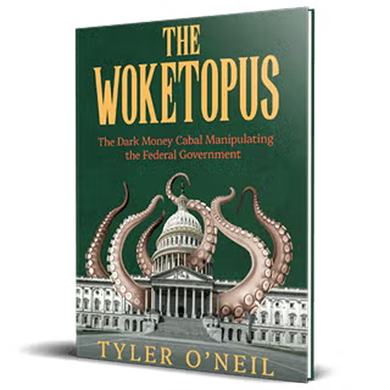
Read the first chapter of The Woketopus right now for FREE
Today, even with President Trump’s victory, leftist elites have their tentacles in every aspect of our government.
The Daily Signal’s own Tyler O’Neil exposes this leftist cabal in his new book, The Woketopus: The Dark Money Cabal Manipulating the Federal Government.
In this book, O’Neil reveals how the Left’s NGO apparatus pursues its woke agenda, maneuvering like an octopus by circumventing Congress and entrenching its interests in the federal government.
You can read the first chapter of this new book for FREE in this eBook, The Woketopus: Chapter One using the secure link below.

TRENDING ARTICLES

The Daily Signal depends on the support of readers like you.
RELATED ARTICLES





Don’t miss the

Don’t miss the signal