
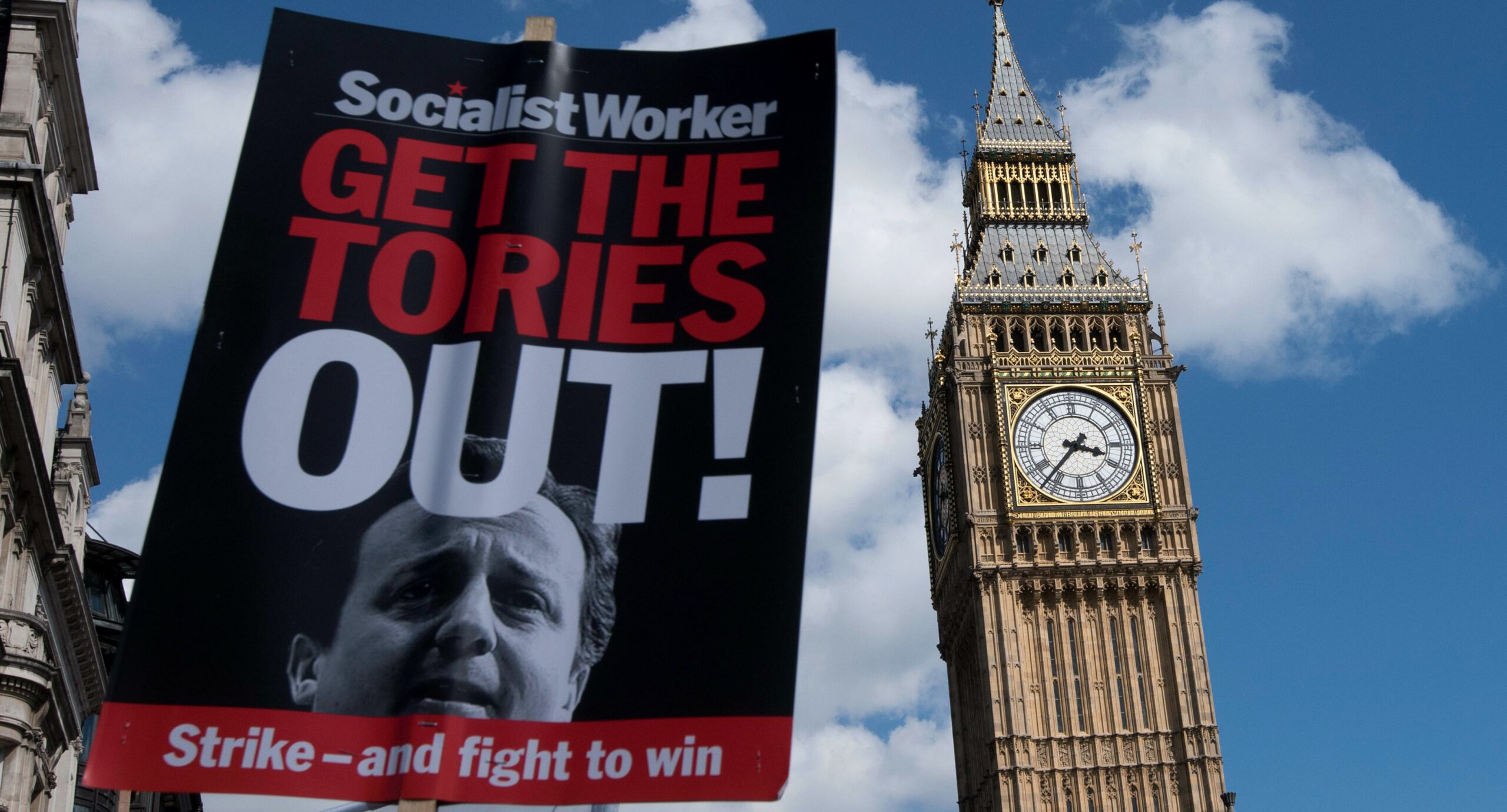
I’ve studied Britain for 20 years, but this last week gave me an appreciation for its politics I’ve never had before. Over the last seven days, I followed conservative candidates in Darlington, Bradford West and Brent Central as they canvassed and addressed the public. All worked hard; all were worthy, and all were in tough constituencies. In the end, none won.
Like every other commentator, I failed to predict accurately the outcome of the election. I thought the Tories would win 280 seats. But fortunately, learning isn’t all about making bad predictions.
As an American, I’m used to the way we do things there. I don’t believe our ways are necessarily better, though in a few cases they are. Mostly, I believe that the British system is better in Britain, while the U.S. system is better in America. We are similar people, but not identical.
There’s an emphasis on canvassing in Britain that’s disappeared in the U.S. I’ve lived in Ohio, Iowa, Connecticut and Washington, D.C., and I don’t recall ever having my doorbell rung by a candidate.
There are many reasons for this. It certainly reflects the fact that I’ve not lived in competitive districts. But underlying factors matter too: the size of U.S. constituencies, Britain’s rules on campaign spending and advertising that make media blitzes impossible, and the fact that Britain is a more locally diverse place than the U.S.
The difference is appealing. I don’t think that people care about politics more in Britain than they do in America—in fact, a lot of the doorbells those Tory candidates rang weren’t answered at all. Still, the reliance on shoe leather, not television ads, makes British politics seem both more local and more truly representational.
TRENDING ARTICLES
Another difference between the U.S. and Britain is now obvious: It’s easier to get surprising results in Britain. The easy explanation for this is that British pollsters are incompetent. But I’ve met many of them and think British pollsters and election analysts are world-leading.
But the fact of surprise remains—of the last six British elections, three (1992, 2010, and 2015) were shocking. The reasons for this are two-fold. First, there are about 150 marginal constituencies in Britain, most of them fought between Labour and the Tories. That’s proportionally more than there are in the U.S., so shocks are easier to come by.
Second, the fact that Britain is a parliamentary system matters profoundly. In America, it’s routine for the U.S. public to elect, for example, a Republican House and a Democratic president. In Britain, this is by definition impossible: a Tory Commons means a Tory PM. If the polls get it wrong, it’s not just the Commons that changes, it’s the prime minister.
But now that the dust has settled, the similarities are striking. The political map of Britain now looks like that of the United States, with Labour holding large chunks of London, the Midlands, South Wales, and most of north England, while the rest is Tory. As in the U.S., the cities and a few regions are liberal—the rest are conservative.
And it’s not just the map—the coalitions look similar too. Labour looks a lot like the Democratic Party: ethnic minorities and the rich, progressive elite give it London, and the urban and post-industrial working class and state employees, give it the rest. The Tories, by contrast, have the middling sort. That describes the Democratic and Republican parties as well.
The liberal coalitions are large enough to win a national vote, but are vulnerable to being defeated in detail, which is why the Democrats have a structural advantage in taking the White House, while the Republicans have the edge in the House. In Britain, where the legislature controls the executive, this gives the Tories an edge.
In the U.S., both Democrats and Republicans have responded to this by moving towards a more populist politics—the Democrats to appeal to the white working classes, the Republicans to reach the upper-middle class.
That’s the open space in British politics as well. UKIP tried to occupy it, and while they may have cost both Labour and the Tories some seats, their future in Parliament is uncertain. The Tories look unlikely to indulge in populism, but there’s a tradition of working-class populism in Britain too that Labour could grasp if it wanted to. That kind of Labour Party would be anti-Europe, pro-small business, supportive of national defense and friendly to welfare—but only for the deserving poor, not as a way of life.
It would mean rejecting the cosmopolitan, reflexively pro-Europe, London elite. But perhaps a British party needs to take a risk. Winning a Thatcher or Blair-sized majority may take a big risk. Whether any party decides to take that risk is a question for 2020.
Originally published in The Yorkshire Post
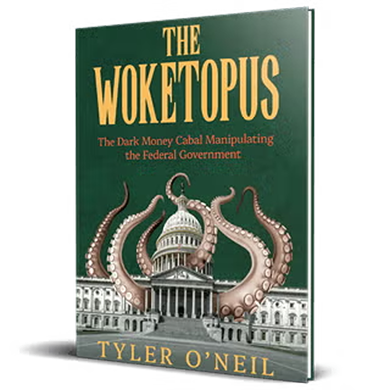
Read the first chapter of The Woketopus right now for FREE
Today, even with President Trump’s victory, leftist elites have their tentacles in every aspect of our government.
The Daily Signal’s own Tyler O’Neil exposes this leftist cabal in his new book, The Woketopus: The Dark Money Cabal Manipulating the Federal Government.
In this book, O’Neil reveals how the Left’s NGO apparatus pursues its woke agenda, maneuvering like an octopus by circumventing Congress and entrenching its interests in the federal government.
You can read the first chapter of this new book for FREE in this eBook, The Woketopus: Chapter One using the secure link below.

TRENDING ARTICLES

The Daily Signal depends on the support of readers like you.
RELATED ARTICLES





Don’t miss the

Don’t miss the signal