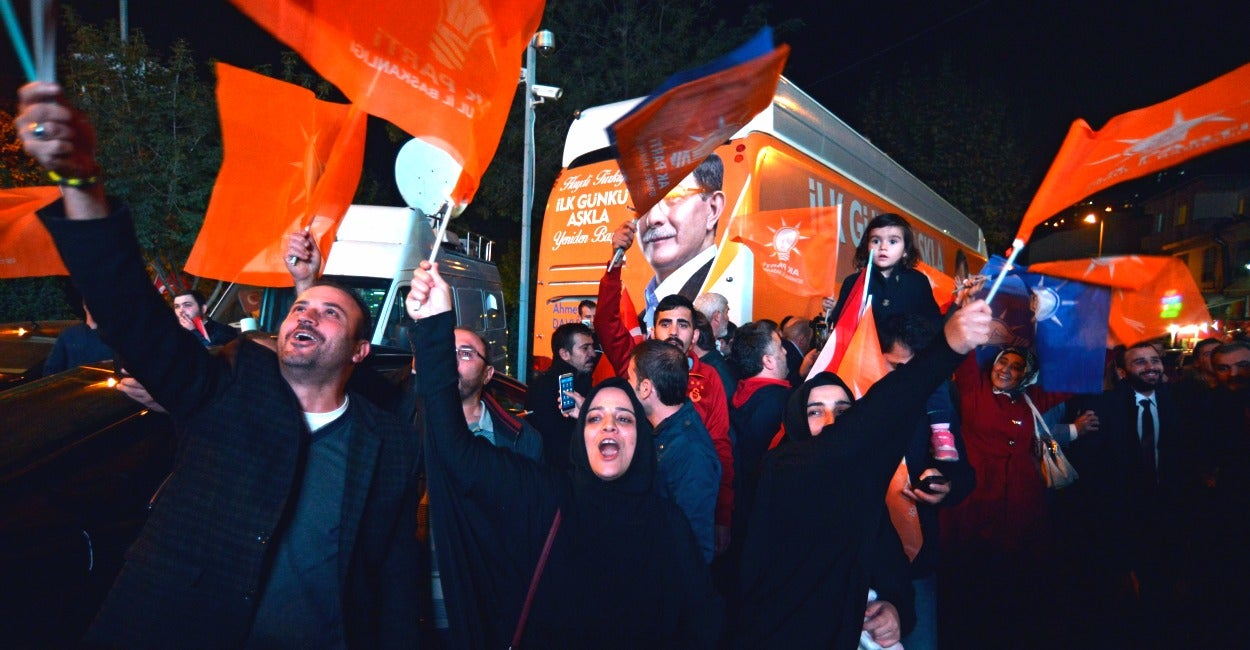
Last June, Turkey held a general election, but no single party won enough seats within the legislature to form a single ruling party. After a few months of trying, it was clear that no coalition government could be formed, either.
President Recep Tayyip Erdogan was therefore forced to call another election, in line with parliamentary practice when situations like this occur.
Why does the AKP want to amend the constitution?
Right now, Turkey is a parliamentary democracy. Most powers are held with the prime minister, and the president largely serves a ceremonial role.
Ever since Erdogan moved from prime minister to president, he has sought to consolidate more and more power and hopes to turn Turkey into presidential system of government. For the time being, at least, it looks like this idea will be shelved.
What were the results?
TRENDING ARTICLES
Voter turnout was incredibly high at 85 percent. By comparison, during the last U.S. presidential election, voter turnout was around 57 percent.
With a parliament of 550 seats, the conservative- and Islamist-leaning but economically liberal Justice and Development Party (AKP) needed at least 276 seats to form a government. AKP ended up with 316 seats received, allowing them to form a single-party government.
However, Erdogan’s AKP was far off its dream goal of the 400 seats needed to amend the constitution or even the 330 seats needed to amend the constitution with a public referendum.
So now that there is a government, is Turkey united?
Although Prime Minister Ahmet Davutolu’s victory speech was conciliatory and spoke of the AKP governing for all Turks, the country is still starkly divided between those who favor a Western secular style of government on one hand and those who prefer a more socially conservative and Islamist style of government on the other.
On the positive side, the global markets have reacted favorably to the AKP victory. While controversial in many social areas, the AKP has brought growth to Turkey’s economy since it came into power in 2002. The Turkish Lira surged today by 5 percent against the U.S. dollar after being one of the worst performing currencies in the world this year. The Borsa Istanbul Index, Turkey’s main stock market, closed 8 percent up on the election news.
Why should America care about Turkey?
First and foremost, Turkey is a member of the North Atlantic Treaty Organization and was a staunch ally of the U.S. during the Cold War. Even though Washington and Ankara might have their differences on certain issues, Turkey has been a key player inside NATO for decades. For example, the Turks have deployed thousands of troops to Afghanistan. They have commanded the NATO mission there twice since 2002. Turkey still maintains more than 500 troops in Afghanistan as part of NATO’s Resolute Support mission, making it the fifth largest troop contributor out of 40 nations.
With the fight against ISIS really heating up, and the refugee problem in Europe only getting worse, now is not the time to turn our backs on Turkey. Although some of Erdogan’s positions are concerning, it appears that his wings have been clipped, since the AKP is still unable to amend the constitution to give the office of the presidency more power.
For long-term Turkish stability and democracy, this is a good thing.
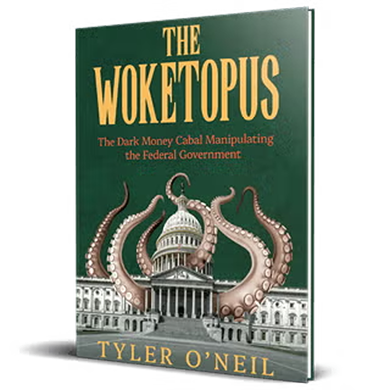
Read the first chapter of The Woketopus right now for FREE
Today, even with President Trump’s victory, leftist elites have their tentacles in every aspect of our government.
The Daily Signal’s own Tyler O’Neil exposes this leftist cabal in his new book, The Woketopus: The Dark Money Cabal Manipulating the Federal Government.
In this book, O’Neil reveals how the Left’s NGO apparatus pursues its woke agenda, maneuvering like an octopus by circumventing Congress and entrenching its interests in the federal government.
You can read the first chapter of this new book for FREE in this eBook, The Woketopus: Chapter One using the secure link below.

TRENDING ARTICLES

The Daily Signal depends on the support of readers like you.
RELATED ARTICLES





Don’t miss the

Don’t miss the signal