
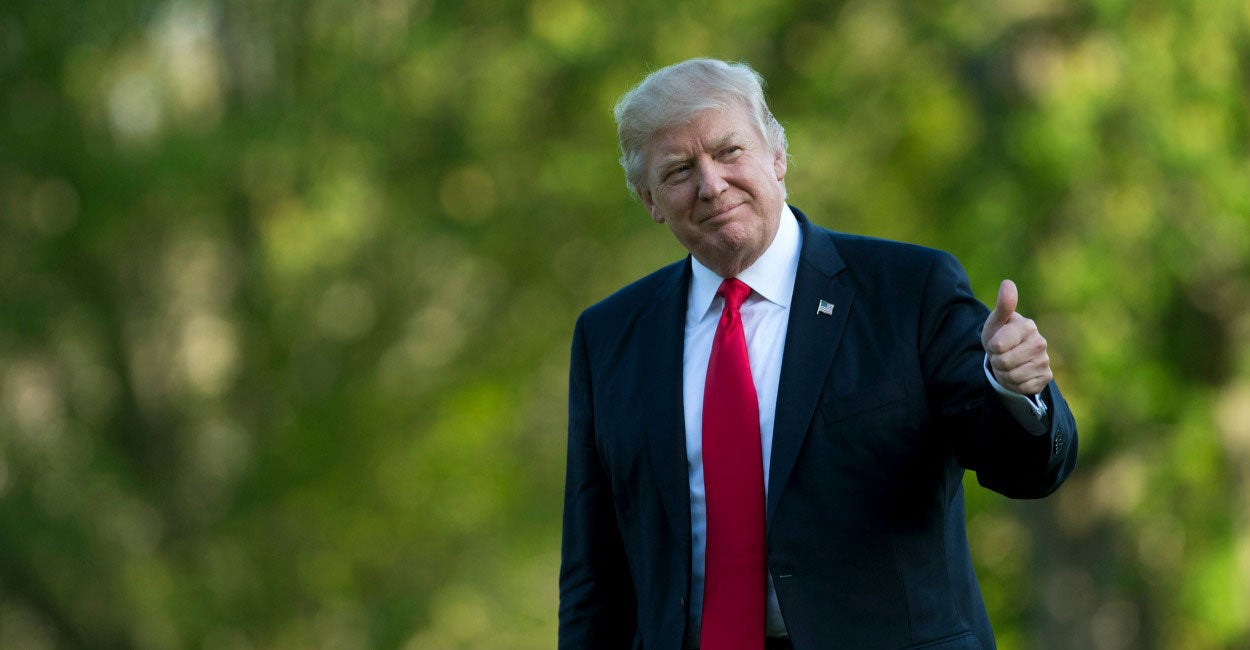
No two campaigns for the presidency are the same, and few were as surprising or unconventional as President Donald Trump’s nomination and subsequent victory.
It should come as no surprise then that Trump’s “first 100 days” in office—an archaic benchmark set during a different era—have been equally unconventional and in many important ways successful.
Nowhere is that change more apparent than in foreign affairs.
Eight years ago, President Barack Obama began his infamous apology tour, confessing the sins of America and ceding moral authority to any nation or world body willing to listen.
To Europe he apologized for the “times where America has shown arrogance and been dismissive, even derisive.” Obama told the G-20 of world leaders that “with my election and the early decisions that we’ve made, that you’re starting to see some restoration of America’s standing in the world.”
By contrast, the Trump administration acted decisively in response to Syrian dictator Bashar Assad’s gassing of his own people. The response was appropriate, proportional, and carefully calibrated—and a welcome change from Obama’s inept response to similar actions.
TRENDING ARTICLES
The missile attack on Assad’s air base coincided with Trump’s dinner with Chinese President Xi Jinping, perhaps adding clarity to Trump’s comments earlier in the month that “If China is not going to solve North Korea, we will.”
My Heritage Foundation colleague James Carafano explains the Obama administration was “risk-averse.” There was a “tendency to pull decision-making to Washington” because its “top goal was to figure out how to disengage.”
The Trump administration “seems more inclined to let commanders do their jobs and exercise their military judgment.” The results are welcomed and noticeable on the world stage.
Trump’s most obvious domestic accomplishment is the successful confirmation of Neil Gorsuch to the Supreme Court.
Not only did candidate Trump seize on the vacancy during the campaign—an opportunity created by a surprisingly strong stand from Senate Republicans—but he nominated a conservative judge that unified a fragmented Republican Party.
Gorsuch’s impact on the court will be felt for a generation.
Beyond that, there are a few victories Republicans can claim as a result of the party’s unified control of Washington.
The president and his administration have taken aggressive actions to begin rolling back the administrative state and the worst excesses of the Obama administration.
Obama-era fuel economy standards are likely gone. Draconian rules on coal-fired power plants will be blocked.
And then, of course, there has been the historic use of the Clinton-era Congressional Review Act to permanently repeal more than a dozen midnight regulations issued at the end of the Obama administration. Unlike other regulatory efforts, these cannot be undone by future administrations.
Overall, the Trump administration’s regulatory efforts will save the U.S. economy $18 billion annually.
And then, of course, there is the issue of immigration.
During previous administrations, the federal government’s commitment to enforcing America’s immigration laws waned as Washington’s desire to grant another round of amnesty grew.
There can be little doubt Trump is delivering on one of his key campaign promises by enforcing our nation’s immigration laws. The results are apparent, with illegal border crossings dropping to a 17-year low.
Predictably, liberals will use the 100-day marker to celebrate what has not been accomplished.
While it took Obama, then-Senate Majority Leader Harry Reid, and then-House Speaker Nancy Pelosi 428 days to make Obamacare the law of the land, the fact that it remains so is a disappointment.
There are multiple reasons for that, most notable being the extreme divisions within the Republican Party—for instance, some Republicans quietly hoped to repeal the medical device tax while leaving the vital organs of Obamacare in place.
These divisions were exacerbated by an insular, leadership-driven legislative process that was designed to “accomplish something” rather than build consensus and deliver for the American people.
For its part, the Trump administration was slow to recognize just how bad the policy, politics, and process of the original repeal and replace proposal were. It is clear it has learned from that initial stumble, though.
Trump’s enormous wisdom in tapping Mike Pence as his vice president was apparent in the aftermath of the health care debacle, when Pence’s leading role in pushing to restart health care talks helped the White House recapture momentum for its ambitious legislative agenda.
It is possible—indeed, it is likely—that Congress will provide relief from Obamacare and that our crony-laden tax code will be reformed in less than 365 days. And if you believe the rumors, another conservative jurist will be sitting on the Supreme Court by then as well.
No one would deny that there have been stumbles and missed opportunities—many of those generated by congressional malfeasance—but there is no doubt that an unconventional president is enjoying unconventional successes in his first 100 days.
If he learns the right lessons from the health care debate and refuses to let the Washington establishment drive him into similar ditches, many more successes are to come.
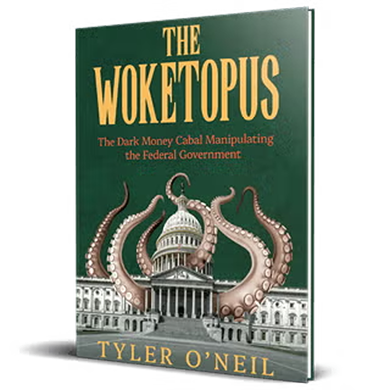
Read the first chapter of The Woketopus right now for FREE
Today, even with President Trump’s victory, leftist elites have their tentacles in every aspect of our government.
The Daily Signal’s own Tyler O’Neil exposes this leftist cabal in his new book, The Woketopus: The Dark Money Cabal Manipulating the Federal Government.
In this book, O’Neil reveals how the Left’s NGO apparatus pursues its woke agenda, maneuvering like an octopus by circumventing Congress and entrenching its interests in the federal government.
You can read the first chapter of this new book for FREE in this eBook, The Woketopus: Chapter One using the secure link below.

TRENDING ARTICLES

The Daily Signal depends on the support of readers like you.
RELATED ARTICLES




Don’t miss the

Don’t miss the signal