

National elections have been occasions for celebration for European conservatives in the past year, with victories in national elections in Portugal, Spain, and the Netherlands.
Alongside those, European polling indicated continued growth for conservative political groups ahead of the recently concluded European Parliament elections, in which conservatives charged to victory.
While the votes are still being counted, conservative parties gained ground in the European Parliament, mainly at the expense of the Greens and French President Emmanuel Macron’s centrist Renew party, which appears set to lose about 40 seats in the 720-seat European Parliament.
Turnout in this year’s elections is estimated at 51%. If confirmed, that would be a 30-year high for European Parliament elections and would lend credence to voters’ concerns.
In fact, owing to a crushing defeat of his Renew party at the hands of the National Rally in the European Parliament vote in France, Macron has already dissolved the French parliament and called snap elections.
Thanks to their additional seats overall, conservatives will have greater influence on migration and climate policies and can contribute to a heightened respect for national sovereignty within the European Union.
TRENDING ARTICLES
Perhaps the starkest message voters sent to the European Union was their rejection of Europe’s Green Deal, as the Greens are set to lose about a quarter of their seats.
The Green Deal aims to make Europe carbon-neutral by 2050, in the most ambitious agenda of its kind, with dictates imposed by Brussels to force compliance. This push has featured the economic bulldozing of European farmers and the equivalent of billions of dollars in state spending to make progress on these unrealistic goals.
With all conservative party groups poised to overtake the Greens, Europe has a window of opportunity to jettison the Green Deal’s unrealistic targets and bureaucratic dictates that ignore Chinese and Russian free-riding, disincentivize agricultural production, and fuel massive state spending.
Not only does illegal immigration stand out as a lead issue in American voters’ minds, our transatlantic cousins also see illegal immigration, from Eastern Europe down across the Mediterranean, as a defining political issue.
In prior years, Eastern European countries, such as Lithuania and Poland, have built border fences and reinforced border security patrols to prevent illegal migration, even in the face of European Union criticism. Sensing the direction of the political winds, the EU has recently expanded its border security force, Frontex, and signed legislation to speed up asylum-application processing at the borders of the European Union.
Having now seen the popular support behind actions taken by countries such as Poland and Lithuania, as well as Italy, to curb illegal migration, often despite criticism from Brussels, conservatives’ victories in the European Parliament elections open the door for further enhancing border protection measures while reworking uncalibrated asylum systems.
As they contemplate the outlook for their five-year terms, the newly elected conservative members of the European Parliament should work to reframe the bloc’s approach to national sovereignty.
Philosophically, conservatives have long championed localism against centralization of power, arguing that turning from proximate decision-makers to far-off bureaucrats leads to worse policymaking. Yet, the European Union has steadily chipped away at national sovereignty in areas ranging from trade to defense policy, centralizing power in Brussels, and effectively demoting national lawmakers to bystanders.
That centralizing tendency has fueled support for conservative parties reaching back even to the 2019 EU elections as conservatives have rejected this supranational overreach in favor of domestic solutions.
Despite being bolstered by their success in the EU Parliament elections, conservatives should be wary of repeating recent history where electoral victories have not translated into governing victories.
For example, after seven months of negotiations, the Dutch ended up with a technocratic prime minister, and both the Spanish and the Portuguese ended up with governing coalitions led by, or dependent on, Socialist parties.
For that reason, it’s essential for newly elected conservatives to staunchly back their voters’ preferences when it comes to reducing illegal immigration, reworking climate policy, and respecting national sovereignty.
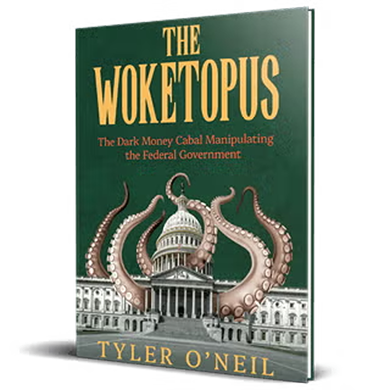
Read the first chapter of The Woketopus right now for FREE
Today, even with President Trump’s victory, leftist elites have their tentacles in every aspect of our government.
The Daily Signal’s own Tyler O’Neil exposes this leftist cabal in his new book, The Woketopus: The Dark Money Cabal Manipulating the Federal Government.
In this book, O’Neil reveals how the Left’s NGO apparatus pursues its woke agenda, maneuvering like an octopus by circumventing Congress and entrenching its interests in the federal government.
You can read the first chapter of this new book for FREE in this eBook, The Woketopus: Chapter One using the secure link below.

TRENDING ARTICLES

The Daily Signal depends on the support of readers like you.
RELATED ARTICLES





Don’t miss the

Don’t miss the signal