
If the Email Privacy Act becomes law, the inboxes of millions of Americans will get a security update overnight.
The bill would prohibit the government from accessing private email accounts without a warrant.
But civil rights and law enforcement advocates remain at odds over the legislation. Proponents say the bill secures privacy rights online while opponents complain it unfairly privileges digital information.
At issue is the 1986 Electronic Communications Act. Passed by Congress before most Americans went online, that law considers emails older than 180 days abandoned and makes them subject to search.
To access those emails, government agencies don’t need a warrant. They only need to ask for the messages from Internet service providers.
In the online age, Rep. Kevin Yoder, R-Kan., says, the antiquated law provides ample opportunity for abuse.
TRENDING ARTICLES
“Government agencies,” Yoder told The Daily Signal, “have enjoyed the ability to rifle through innocent Americans’ emails looking for evidence of both civil and criminal penalties.”
Cosponsored by Rep. Jared Polis, D-Colo., the legislation would expand Fourth Amendment privacy protections for personal papers to digital files.
Polis described current laws as outdated and “trapped in a decade where dial-up Internet was standard.”
The overdue update has left Americans’ inboxes in danger, he wrote, of “being warrantlessly [sic] searched by government agencies.”
And most in the House appear to agree with that sentiment. Already, 312 representatives have signed up to cosponsor the legislation, making it the most popular bill in Congress.
But the bill repeatedly has failed to advance out of the Judiciary Committee since it’s introduction in 2012. That could change in April.
Two aides told The Daily Signal that Chairman Bob Goodlatte, R-Va., plans to “swiftly move” the bill through committee.
Two digital goliaths, Google and Yahoo, have given their stamp of approval. Some privacy groups also have deployed their bandwidth to lobby the committee for a vote.
Still, some law enforcement officials say the bill should stay offline.
They complain it would place government agents at a disadvantage by creating a new warrant requirement that would tip off criminals and “privilege” digital evidence.
Joshua Zive, general counsel for the FBI Agents Association, told The Daily Signal that the bill would require law enforcement “to show their cards” by providing extra notice.
In addition to conducting the search, Zive said, law enforcement would be required to detail the reasons for their investigation to Internet providers and the person of interest. That’s a marked departure from the current standard, he said.
“This notice requirement doesn’t have to be provided for the vast majority of car, home, and safety-deposit searches,” he said. But under the Email Privacy Act, “everything that’s electronic would get this—it’s a massive universe of things.”
If the bill becomes law and Internet companies aren’t compelled to turn over documents in a timely manor, Zive envisions a world where “electronic devices could become almost impenetrable safe houses for evidence, like nothing in the physical world.”
Greg Nojeim, senior counsel at the Center for Democracy and Technology, rejects that reasoning.
In an interview with The Daily Signal, Nojeim said that, with permission from a judge, law enforcement already can delay notice of a search to keep an investigation secret.
But eventually, government agencies “still have to disclose” the details of a search.
“In the physical world, citizens have a sense of why police are there [serving a search warrant,]” he said, adding:
We want that same rule in the virtual world. This idea that warrants should be served without notice is very dangerous to liberty.
As Americans increase their digital footprint, he argues that permanent constitutional safeguards ought to extend to a country increasingly becoming more and more online.
“Nowadays, your whole life can be lived online,” Nojeim said. “It makes sense to transfer the same protection you enjoy in the physical world to the virtual world.”
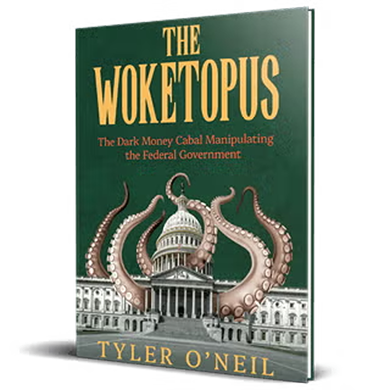
Read the first chapter of The Woketopus right now for FREE
Today, even with President Trump’s victory, leftist elites have their tentacles in every aspect of our government.
The Daily Signal’s own Tyler O’Neil exposes this leftist cabal in his new book, The Woketopus: The Dark Money Cabal Manipulating the Federal Government.
In this book, O’Neil reveals how the Left’s NGO apparatus pursues its woke agenda, maneuvering like an octopus by circumventing Congress and entrenching its interests in the federal government.
You can read the first chapter of this new book for FREE in this eBook, The Woketopus: Chapter One using the secure link below.

TRENDING ARTICLES

The Daily Signal depends on the support of readers like you.
RELATED ARTICLES





Don’t miss the

Don’t miss the signal